Monday, March 18, 2019

Monday-Tuesday-Wednesday March 18-20 Review Review Test & Intro to Chapter 18

Monday, March 18
NM.CLL.2.2 Understand the meaning of memorized words and phrases in sentences.
NM.CLL.2.3 Generalize short fiction and non-fiction passages about familiar topics in the target language, using context clues (signs, charts, graphs, etc.).
NM.CLL.2.4 Infer conclusions from simple spoken and written passages about familiar topics, using context clues and cognates.
NM.CLL.2.5 Understand language components (stems, prefixes, tones, verb endings, parts of
speech) that are used in the target language.
NM.CLL.3.3 Use appropriate pronunciation and voice inflection in spoken presentations.
Objective: Address problem areas revealed by Friday's test.

Bellwork
Identify four neuter nouns in One Hero Wins the War. Nouns can be in any case. Write these on your review sheet.

For many of you, your scores on the comprehension test on Friday were way out of sync with your normal scores. So, we are going to have a second go at it. 

And there was the additional problem that only these students' tests were submitted/recorded by Google Classroom:

Erin O’Connor
Thomas Hylton
Emily Wellspeak
Lataisha Doss
Madeline Surber
Soe Moo
Tyler Presson
Elise Butts

Adysson
Ywa Blu
Megan

So....Let's go back to the text "One Hero Wins the War" and answer the questions below. With a board race.

In the passage on page 134, identify the following:
1. Five imperfect verb forms.
2. Four neuter nouns.
3. Four adverbs.
4. All examples of the Latin words for "one," "two," and "three."
5. Two prepositional phrases using the accusative case and two using the ablative case.


New review test.

17 Review Questions on the text
http://www.quia.com/quiz/7212694.html


New review activities. Answer Key

New comprehension reading "Aurelia is worried." Latin II 1st period.
New comprehension reading, "Aurelia is worried" Latin II 2nd period.


Link to handouts in Google Classroom (First Period)

Homework Activity IIIe and IIIf; vocabulary for Chapter 18
__________________________________________________

Tuesday March 19
NM.CLL.2.2 Understand the meaning of memorized words and phrases in sentences.
NM.CLL.2.3 Generalize short fiction and non-fiction passages about familiar topics in the target language, using context clues (signs, charts, graphs, etc.).
NM.CLL.2.4 Infer conclusions from simple spoken and written passages about familiar topics, using context clues and cognates.
NM.CLL.2.5 Understand language components (stems, prefixes, tones, verb endings, parts of
speech) that are used in the target language.
NM.CLL.3.3 Use appropriate pronunciation and voice inflection in spoken presentations.

Objective: Review grammar from Chapters 13-18
EQ. Can you conjugate regular and irregular verbs in the present and imperfect tenses?

Bellwork
Finish the first two sections of Review Exercises. Take out homework so I can check it.

When you have finished this, practice the vocabulary for 18 Chapter 
18 Quizlet with images
18 Quizlet no images

Direct instruction: Answers to review exercises

Assessment: New Comprehension text for 13-17. Aurelia is worried. 
Period 1 link
Period 2 link

Exit ticket Independent Turn in comprehension test and review activity sheets.
------------------------------------------------
Wednesday March 20
NM.CLL.2.2 Understand the meaning of memorized words and phrases in sentences.
NM.CLL.2.3 Generalize short fiction and non-fiction passages about familiar topics in the target language, using context clues (signs, charts, graphs, etc.).
NM.CLL.2.4 Infer conclusions from simple spoken and written passages about familiar topics, using context clues and cognates.
NM.CLL.2.5 Understand language components (stems, prefixes, tones, verb endings, parts of
speech) that are used in the target language.

NM.CLL.3.3 Use appropriate pronunciation and voice inflection in spoken presentations.

Objective: Introduce new grammar (3rd declension adjectives), text and vocabulary for Chapter 18.

Chapter 18 Arrival at the Inn
Bellwork: Study the Vocabulary for Chapter 18 Listed by Part of Speech (Google Classroom 2nd period). Vocabulary Listed by part of speech (Google Classroom 1st period)


18 Chapter Ecce Romani I initial questions
Open your textbooks to pages 136-137 (I). Spend two minutes looking at the picture, reading the "In This Chapter" box and the title of the story, and looking very quickly at the vocabulary list. Then answer the following questions:

a. Where have the Cornelii arrived?
b. Who greets them?
c. How does each of the characters react to the dogs?
d. Who can give an example of a 1st and 2nd declension adjective?
e. Why is this called a 1st and 2nd declension adjective?
f. We have met some adjectives that do not have these endings but endings like those of 3rd declension nouns. Who can give an example?


Listen to the story and vocabulary read aloud. Audio files for Chapter XVIII

Vocabulary for Chapter XVIII in Quizlet


Copy the forms of third declension adjectives in the chart on page 138 (omnis, omnis, omne), Read the notes then copy the 3rd declension adjectives in note #4.

Direct instruction: 1. Most first and second declension adjectives that end in -er keep the -e before the -r in all other forms: miser, misera, miserum. But there are some that drop the -e: noster, nostra, nostrum.

2. The ablative singular of 3rd declension adjectives ends in -i not -e! This is something that can really mess you up.

3. Third declension adjectives with nominative and genitive forms with the same number of syllables (parasylabic) have a genitive plural: -IUM; and a neuter nominative plural: -IA.
Examples:
omnis omnis omne
immobilis, immobilis immobile
brevis, brevis breve
incolumnis incolumnis incolume (unharmed)

Guided instruction: As a class we identify and list noun/adjective pairs in the story.

Chapter 18 Kahoot

Exit ticket. #6 Responde Latine.

Monday, March 11, 2019

Monday, March 11-Friday March 15. Chapter 17 "Shall we stay at the inn?" Irregular verbs.

NM.CLL.2.2 Understand the meaning of memorized words and phrases in sentences.
NM.CLL.2.3 Generalize short fiction and non-fiction passages about familiar topics in the target language, using context clues (signs, charts, graphs, etc.).
NM.CLL.2.4 Infer conclusions from simple spoken and written passages about familiar topics, using context clues and cognates.
NM.CLL.2.5 Understand language components (stems, prefixes, tones, verb endings, parts of 
speech) that are used in the target language.
NM.CLL.3.3 Use appropriate pronunciation and voice inflection in spoken presentations.

Objective: Review nouns and verbs for unit test.

EQ. How do we decline nouns in the first three declension in all forms?  Can you distinquish between common regular and irregular verbs?

Bellwork: Use the chart (handout) to decline the nouns in all cases.


Audio for Chapter XVII
Story

Board race: In three teams decline the nouns on the whiteboard in all cases. One at a time enter a correct form for a declension. Players do not have to fill out the chart in any particular order. Team members may correct or add to a prior team mate's noun. Team words.

Collaborative: In the same groups, make a T-chart then, using the story,  write in one column regular verbs; in the other column irregular verbs found in the text.

Whole group. Follow up with another board race. Winning team is the one whose two columns of verbs are the most complete.  Time is also a factor. Who will finish first?

Collaborative: Do Exercise 17b (on the back of today's handout). Each student must record their own/the groups' answers. You may want to use the irregular verb charts in this blog (below)

Independent Vocabulary for Chapter XVII in Quizlet
Vocabulary without images
Vocabulary with images
Vocabulary with images version 2


Irregular verb review. Homework: Copy the irregular verb charts in this post into your notes and date this entry. 


Board race with irregular verbs in present, imperfect and future forms.

Exit ticket: Translate
1. In fossam descendere nolo.
2. Plaustrum onus fert.
3. Cornelii et Eucleides ad cauponam eunt.

Homework: Practice cumulative vocabulary with two Quizlet sents
Part I
Part II
Learn the forms of irregular verbs: present, imperfect and future.
Study Review III Chapters 131-135 for unit test (IIIa, IIIb, IIId and IIIf.

______________________________________________________
Tuesday March 12
NM.CLL.2.2 Understand the meaning of memorized words and phrases in sentences.
NM.CLL.2.3 Generalize short fiction and non-fiction passages about familiar topics in the target language, using context clues (signs, charts, graphs, etc.).
NM.CLL.2.4 Infer conclusions from simple spoken and written passages about familiar topics, using context clues and cognates.
NM.CLL.2.5 Understand language components (stems, prefixes, tones, verb endings, parts of 
speech) that are used in the target language.
NM.CLL.3.3 Use appropriate pronunciation and voice inflection in spoken presentations.

Objectives: Learn adverbs for unit test. Practice  verbs for unit test.

Bellwork
Do Exercise 17b (on the back of yesterday's handout). Each student must record their own/the groups' answers. You may want to use the irregular verb charts in this blog (above)

Guided
Group: 
Conjugation with beanbags in groups of 2-3.First period
Conjugation with beanbags  Second period

Direct instruction: Adverbs (pp. 100-101)

Direct Instruction: Latin Tutorial on Adverbs


Exit ticket (as time allows). Exercise IIIf Adverbs page133.

Homework: Study adverbs in Quizlet set. There are a lot of them so plan to give some time to this. However the adverbs above, from the book are the most important to learn.
Study Review III Chapters 131-135 for unit test (IIIa, IIIb, IIId and IIIf. -------------------------------
NM.CLL.2.2 Understand the meaning of memorized words and phrases in sentences.
NM.CLL.2.3 Generalize short fiction and non-fiction passages about familiar topics in the target language, using context clues (signs, charts, graphs, etc.).
NM.CLL.2.4 Infer conclusions from simple spoken and written passages about familiar topics, using context clues and cognates.
NM.CLL.2.5 Understand language components (stems, prefixes, tones, verb endings, parts of 
speech) that are used in the target language.
NM.CLL.3.3 Use appropriate pronunciation and voice inflection in spoken presentations.

Wednesday March 15

Objective: Unit Test Review
EQ. How do you recognize adverbs in Latin and English?

Bellwork:
Independent work. Copy the adverbs in Activity 13f and their correct definitions into your notebooks.
Compare your answers with those of another student. 

Check student answers in notebooks while they do the following collaborative activity. 

Collaborative. In your groups translate the Story, 17.
Group 1: lines 1-7
Group 2. lines 8-14
Group 3. lines 15-19


Whole class. Review student translation.

Collaborative: Round robin practice with verb conjugation chart. Do the irregular verbs. 


____________________
Thursday March 14
NM.CLL.2.2 Understand the meaning of memorized words and phrases in sentences.
NM.CLL.2.3 Generalize short fiction and non-fiction passages about familiar topics in the target language, using context clues (signs, charts, graphs, etc.).
NM.CLL.2.4 Infer conclusions from simple spoken and written passages about familiar topics, using context clues and cognates.
NM.CLL.2.5 Understand language components (stems, prefixes, tones, verb endings, parts of 
speech) that are used in the target language.
NM.CLL.3.3 Use appropriate pronunciation and voice inflection in spoken presentations.

Objective: test review and assessments Chapters 13-17
EQ: Do you know the irregular verb forms in the present, imperfect and future?

Bellwork
Preparation for Part II of Test. 
Independent: Read: Encylopedia Britannica entry on Horatii et Curiatii
Answer in notes:
What Roman historian is our source for this legend?
Who was the king at the time of this event?
How was the surviving Horatii's victory compromised by what he did afterward? 

What virtues did the Horatii brothers display?

Direct instruction: Short video on Horatii et Curiatii
Horatii= Romans; Curiatii = Albani

Last chance practice of irregular verbs (Quizlet)

Assessment: Part I of Unit Test

17 Ecce irregular verbs -change each verb form to the specified tense
http://www.quia.com/quiz/6890654.html

Adverbs Ecce Romani Chapters 13-17 unit Test
http://www.quia.com/quiz/7208582.html


------------------------------------------------
As time allows
When you finish study the vocabulary for the comprehension section of the test in Quizlet.

Whole class, guided: Translation of first paragraph of the story which you will receive as a comprehension exercise tomorrow as the main part of your Unit Test. One Hero Wins a War

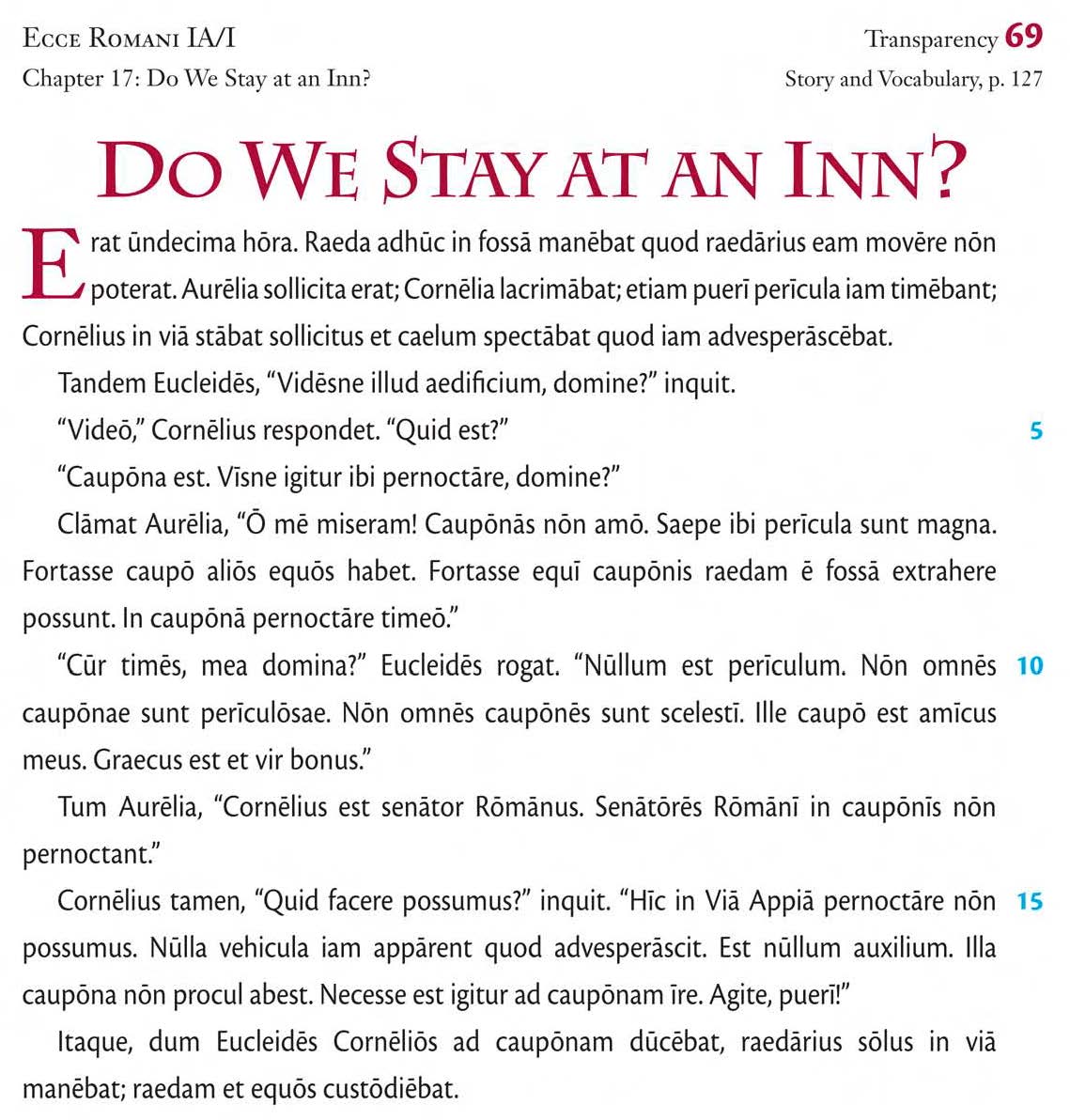
Exit ticket: Ubi Tullus Hostilius, rex tertius, Romanos regebat, pugnabant Romani cum civibus Albae Longae, urbis quae non procul aberat.


Homework: Review these vocabulary words that will be in the Comprehension Text of the Unit Test.  Don't try to memorize them all. You will be able to have the definitions during the exam. But you will be able to work through the text faster if you have reviewed this vocabulary in advance. You will also be able to use the book's glossary. But if you have to look up every word you may not finish all the comprehension questions.

------------------------------------
Friday March 15 (Ides of March) 
Bellwork
. “Beware the ides of March," a soothsayer tells Caesar (Shakespeare 1. 2. 23). But Caesar ignores the warning.

Read over Comprehension passage and questions. 
Whole class: read aloud the Latin passage.
Begin the test, which is in Google Classroom, link below. The test will give you a correct answer after you answer each question. Your answer does not have to look exactly like the test's answer to be correct. Questions will be graded manually. 

One Hero Wins a War (Quizlet) Comprehension section of Unit Test.

Julius Caesar the Great Conspiracy
Marc Antony Funeral Oration.
Text of Oration

Commemoration of Julius Caesar.

Homework: Prereading derivatives for Chapter 18. Text, vocabulary and derivatives sheet are in Google Classroom.
_________________________________________

Monday, March 18
Link to handouts in Google Classroom (First Period)

Chapter 18 Arrival at the Inn
Bellwork: Copy the vocabulary for Chapter 18 from the Vocabulary Listed as Part of Speech (Handout). Include all information.


18 Chapter Ecce Romani I initial questions
Open your textbooks to pages 136-137 (I). Spend two minutes looking at the picture, reading the "In This Chapter" box and the title of the story, and looking very quickly at the vocabulary list. Then answer the following questions:

a. Where have the Cornelii arrived?

b. Who greets them?


c. How does each of the characters react to the dogs?

d. Who can give an example of a 1st and 2nd declension adjective?

e. Why is this called a 1st and 2nd declension adjective?

f. We have met some adjectives that do not have these endings but endings like those of 3rd declension nouns. Who can give an example?


Audio files for Chapter XVIII

Vocabulary for Chapter XVIII in Quizlet


Vocabulary practice:


Copy the forms of third declension adjectives in the chart on page 138 (omnis, omnis, omne), Read the notes then copy the 3rd declension adjectives in note #4.

1. Most adjectives that end in -er keep the -e before the -r in all other forms: miser, misera, miserum. But there are some that drop the -e: noster, nostra, nostrum.

2. Most 3rd declension adjectives have identical forms in the masculine and feminine (like omnis).

3. The ablative singular of 3rd declension adjectives ends in -i not -e! This is something that can really mess you up.
genitive plural: -IUM
neuter nominative plural: -IA.

As a class we will do Exercise 18b p. 139

Identify and list noun/adjective pairs in the story.

Chapter 18 Kahoot

Friday, March 8, 2019

Friday, March 8 Chapter 17

NM.CLL.2.2 Understand the meaning of memorized words and phrases in sentences.
NM.CLL.2.3 Generalize short fiction and non-fiction passages about familiar topics in the target language, using context clues (signs, charts, graphs, etc.).
NM.CLL.2.4 Infer conclusions from simple spoken and written passages about familiar topics, using context clues and cognates.
NM.CLL.2.5 Understand language components (stems, prefixes, tones, verb endings, parts of 
speech) that are used in the target language.
NM.CLL.3.3 Use appropriate pronunciation and voice inflection in spoken presentations.

Objective: Answer in Latin Latin questions about the story. Review irregular verbs.

EQ. Have you mastered the vocabulary from Chapters 15-16? The story of Echo and Narcissus is from a work by the poet Ovid called Metamorphoses. What was Echo's metamorphosis? Narcissus's?

Bellwork: 16_15 Ecce Romani Vocabulary Quiz -25 Questions
http://www.quia.com/quiz/6890701.html

Finish translation of myth of Echo and Narcissus. One of the first flowers to come up in the spring are daffodils, whose scientific name is "narcissus." 
Find the text and vocabulary here (Google Classroom)  Please ask questions.


Chapter 17


Chapter 17 Prereading questions 
Open your textbooks to pages 126-127 and to spend two minutes looking at the picture, reading the "In This Chapter" box and the title of the story, and looking very quickly at the vocabulary list. Then answer the following questions:

a. What time of day has it become?

b. What success has Syrus had getting the carriage out of the ditch?

c. What are the feelings of the Cornelius family likely to be?

d. To what do you suppose the slave in the brown tunic is pointing? 

e. Find out from a quick glance at the story who this slave is.

f. Where did we hear about Eucleides earlier in the course?

g. What did you learn about Eucleides in the essay on the slave market? (Chapter 6)

h. What grammar will this chapter focus on?


Audio for Chapter XVII
Story

Independent Vocabulary for Chapter XVII in Quizlet
Vocabulary without images
Vocabulary with images
Vocabulary with images version 2


Pairs: identify and give translations for 3 irregular verbs in the story.

Assessment. 
15 ff Ecce Romani Noun and Adjective Agreement - 34 Questions
http://www.quia.com/quiz/6890705.html

Exit ticket. What do you find difficult about noun-adjective agreement?

Homework. Study the vocabulary for Chapter 17.  Do the pre-reading derivative for Chapter 17. Review vocabulary for chapters 13-17.

Wednesday, March 6, 2019

Thursday, March 7. Echo and Narcissus myth. More practice with adjectives and nouns

 NM.CLL.2.2 Understand the meaning of memorized words and phrases in sentences.
NM.CLL.2.3 Generalize short fiction and non-fiction passages about familiar topics in the target language, using context clues (signs, charts, graphs, etc.).
NM.CLL.2.4 Infer conclusions from simple spoken and written passages about familiar topics, using context clues and cognates.
NM.CLL.2.5 Understand language components (stems, prefixes, tones, verb endings, parts of 
speech) that are used in the target language.
NM.CLL.3.3 Use appropriate pronunciation and voice inflection in spoken presentations.

Join Quizlet:
https://quizlet.com/join/XssajReJd

Objectives: Read in Latin Myth of Echo and Narcissus.  Review vocabulary in anticipation on Unit Test after Chapter 17.

EQ. How do we approach an unfamiliar text? What is the moral/message of the Echo and Narcissus myth.

Bellwork
Go to Quizlet and study these words from Chapters 15-16 for card game later.  Or if you can move on to:
these vocabulary words from the story Echo and Narcissus. 

Guided instruction. Begin translation of myth of Echo and Narcissus. One of the first flowers to come up in the spring are daffodils, whose scientific name is "narcissus." 
Find the text and vocabulary here (Google Classroom)  Please ask questions.


Independent. Play the 3-Round Review Game to review vocabulary in Chapters 15 and 16.

Exit ticket. Translate:
Narcissus erat bellus puer. Multae puellae eum amabant; nullam ex eis ille amabat.

Homework: 
Add these adjectives and definitions to your note book. Date the entry.
fidelis, fidele, faithful 
gravis, grave, heavy, serious
omnis, omne, all
tristis, triste, sad, gloomy
felix, felicis, happy, fortunate
acer, acris, acre sharp, keen, acute
ingens, ingentis, huge, mighty
sapiens, sapientis, wise

Wednesday, March 6. Noun adjective agreement. Third declension nouns and adjectives. Numbers

NM.CLL.2.2 Understand the meaning of memorized words and phrases in sentences.
NM.CLL.2.3 Generalize short fiction and non-fiction passages about familiar topics in the target language, using context clues (signs, charts, graphs, etc.).
NM.CLL.2.4 Infer conclusions from simple spoken and written passages about familiar topics, using context clues and cognates.
NM.CLL.2.5 Understand language components (stems, prefixes, tones, verb endings, parts of 
speech) that are used in the target language.
NM.CLL.3.3 Use appropriate pronunciation and voice inflection in spoken presentations.

Objective: Learn to recognize nouns and adjectives of the third declension. What adjectives are irregular?  Revisit Roman numerals.

EQ. Nouns and adjectives can belong to different declensions. That means their endings will be different. How are third declension nouns and adjective declined?  What are the irregular adjectives?

Bellwork: (pairs)
Locate and copy the noun adjective pairs in this Quizlet set of Latin sayings. Record in your notebook. You may work with a partner. But everyone needs to record your noun/adjective matches.

Guided: Review bellwork.

Independent. Take 10 minutes to review your handout for third declension adjectives and nouns. Record the declension for unus in your notebook. (see also 116 in your textbook)

Collaborative: Matching game. Form 2-3 groups. On the floor are cards with nouns and adjectives. Play this game like concentration. Each student turns over two cards. Remember the location of each card. Students circle the cards and take turns turning over two cards. The goal is to connect the correct adjective with the/a correct noun.  Within the group, the student with the most correct matches is the winner. The first group to correctly match the pairs is also the winner.

Independent work: record the irregular adjectives for which the mnemonic is UNA NAUTA.(see post from last Friday). Just give the nominative forms.

Song: Numeramus

Independent work. Open book exercise on numbers. Refer to page 116 in the textbook.

Exit ticket 16_15 Ecce Romani Roman Numerals and Counting 1-20 - 18 Questions
http://www.quia.com/quiz/6890714.html


Sunday, March 3, 2019

Tuesday, March 5, Chapter 16

NM.CLL.2.2 Understand the meaning of memorized words and phrases in sentences.
NM.CLL.2.3 Generalize short fiction and non-fiction passages about familiar topics in the target language, using context clues (signs, charts, graphs, etc.).
NM.CLL.2.4 Infer conclusions from simple spoken and written passages about familiar topics, using context clues and cognates.
NM.CLL.2.5 Understand language components (stems, prefixes, tones, verb endings, parts of 
speech) that are used in the target language.
NM.CLL.3.3 Use appropriate pronunciation and voice inflection in spoken presentations.


Bellwork:
Give all the forms for the phrase: animal ferox (a ferocious animal).  Animal is neuter. Use handout 02

Latin is a combination of knowing and the ability to reason. You need to know things like what conjugation or declension a verb belongs to ("the rules"). Then you have to be able to reason your way though all possible options.  You never just know something in a static way.

Your mind has to generate all possibilities and then weigh them one by one. You must know your choices; but then you have to reason your way through these choices. 

Being uncertain is a normal part of this process. Accepting ambiguity is also part of this process. These are valuable intellectual and life skills.

We don't tend to love ambiguity the way the Romans did. Or feel thrilled by the eventual resolution of ambiguity as they did, either. Latin is kind of like chess or poker. You have to consider all possibilities before you make your move. That is the beauty of Latin. It makes you think.

Layers of possibilities accumulate the more you know Latin. 3rd declension adjectives are a good illustration of this.

Go here (Quizlet), or here Google Classroom, or here blog page to find the declension and gender of nouns used in Exercises b-d.

Do Exercise 16d with a partner. We will do the first two together.


Direct and guided instruction. Noun/adjective agreement
Adjectives agree with the nouns they modify in gender, case and number. The adjective and the noun it modifies may belong to different declension and therefore end with different letters.

Direct instruction. Review handout 02
What the heck is an i-stem noun or adjective? Get out your highlighter and take out handout 02. 

 I-stems are a subset of third declension nouns. But there are a lot of them.  Parisyllabic means that the nominative and the genitive forms of a third declension noun have the same number of syllables.


DO NOT try to memorize all this. Just remember that some 3rd declension masculine or feminine nouns will have and -ium in the genitive plural. And that some neuter nouns will have, in addition, an -ia in the nominative and accusative plural. 

Sigh. The vast majority of 3rd declension adjectives behave like -i-stem 3rd declension nouns. Learn to expect and recognize this. 


Guided and collaborative: We will do exercise 16b together. Then in groups do 16c.
Review group work.

Listen again to the vocabulary and story.

Audio: Vocabulary
Audio: Story

Close your devices and prepare for a dictation (See handout 01)

Board race with vocabulary from Chapter 16.

Homework:
Study the vocabulary of Chapters 15 and 16 for a quiz tomorrow. Really study these words. We have a unit review test coming up in Chapter 17,
Vocabulary for Chapters 15 and 16.


Monday, March 4 Chapter 16

NM.CLL.2.2 Understand the meaning of memorized words and phrases in sentences.
NM.CLL.2.3 Generalize short fiction and non-fiction passages about familiar topics in the target language, using context clues (signs, charts, graphs, etc.).
NM.CLL.2.4 Infer conclusions from simple spoken and written passages about familiar topics, using context clues and cognates.
NM.CLL.2.5 Understand language components (stems, prefixes, tones, verb endings, parts of 
speech) that are used in the target language.
NM.CLL.3.3 Use appropriate pronunciation and voice inflection in spoken presentations.

Objective: Introduction to irregular 3rd declension adjectives and to Story 16.

EQ. How do 3rd declension adjectives differ from 1st and 2nd declension adjectives? How from 3rd declension nouns?  In what ways are irregular 3rd declension adjectives irregular?

Bellwork: Pre-reading questions (see below).


16 Chapter Ecce I Prereading Questions

Open your textbooks to pages 118-121. and to spend two minutes looking at the picture, reading the "In This Chapter" box and the title of the story, and looking very quickly at the vocabulary list. Then ask the following questions:

a. What pesky thing do you suppose Sextus is going to do as he plays catch with Marcus?

b. Who are sitting at the side of the road .in the background?

c. What has one of the slaves just done?

d. Why do you suppose he has done this?

e. What have you learned about agreement of nouns 'and adjectives?

f. How does one make an adjective agree with a noun?

g. Can you think of any English derivatives from Latin numbers that you have met so far?

Audio: Vocabulary

Audio: Story


Grammar: Introduction to third declension adjectives. Two handouts: 3rd declension nouns and third declension adjective. 


Guided and exit ticket. We will do 3-10 as a class. Do 1 and two for Exit Ticket.


Homework: Pre-reading derivatives